







More than 80 percent healthcare B2B companies now see digital growth as a key driver for measurable business success. This shift matters because online visibility and operational efficiency hinge on how organizations adopt—and adapt to—emerging technologies. For digital marketing managers aiming to navigate complex healthcare markets, this article outlines core principles, essential metrics, and the strategic approaches needed to accelerate performance and minimize risk while staying ahead of global competition.
Table of Contents
- Digital Growth Definition and Core Principles
- Key Drivers of Digital Growth for Healthcare B2B
- Types and Strategic Approaches Explained
- Measuring Success and Essential Metrics
- Risks, Compliance, and Common Pitfalls
Key Takeaways
| Point | Details |
|---|---|
| Digital Growth Framework | A strategic approach to enhancing business capabilities through technology integration and digital transformation. |
| Multidimensional Approach | Successful digital growth involves technological, strategic, and cultural dimensions that foster cross-functional collaboration. |
| Holistic Measurement Metrics | Essential metrics should include financial performance, technological capability, and patient engagement to gauge digital growth effectiveness. |
| Proactive Risk Management | Organizations must address cybersecurity, regulatory compliance, and workforce adaptation challenges to mitigate risks in digital transformation. |
Digital Growth Definition and Core Principles
Digital growth represents a strategic, holistic approach to expanding business capabilities through technological integration and digital transformation. At its core, digital growth goes far beyond simply establishing an online presence; it encompasses a comprehensive framework for leveraging digital technologies to drive organizational performance, enhance customer experiences, and create sustainable competitive advantages.
The fundamental principles of digital growth are rooted in understanding how technological innovation and organizational adaptation converge to generate measurable business value. This involves systematically integrating data analytics, customer-centric design, scalable technologies, and continuous learning mechanisms that enable businesses to respond dynamically to market changes. Key components include developing robust digital infrastructure, implementing agile methodologies, and creating flexible strategies that can rapidly evolve with emerging technological trends.
Successful digital growth requires a multidimensional approach that addresses technological, strategic, and cultural dimensions. Organizations must invest in building digital capabilities across three critical domains: technological infrastructure, human capital development, and strategic alignment. This means not only acquiring advanced digital tools but also cultivating a workforce skilled in digital literacy, fostering a culture of innovation, and developing organizational processes that support continuous digital transformation.
Here’s a summary of key principles for sustainable digital growth:
| Principle | Description | Business Benefit |
|---|---|---|
| Data Analytics | Using data for informed decision-making | Improved outcomes and efficiency |
| Customer-Centric Design | Prioritizing user experiences | Greater satisfaction and loyalty |
| Scalable Technologies | Implementing flexible digital solutions | Readiness for future expansion |
| Continuous Learning | Adapting to ongoing market and technology changes | Maintains competitive advantage |
Pro tip: Conduct a comprehensive digital maturity assessment to identify your organization’s current digital capabilities and create a targeted roadmap for sustainable digital growth and technological advancement.
Key Drivers of Digital Growth for Healthcare B2B
Digital growth in the healthcare B2B sector is driven by a complex interplay of technological, organizational, and environmental factors that fundamentally reshape how medical businesses operate and deliver value. Advanced technological infrastructure and strategic data integration have emerged as critical mechanisms for transforming traditional healthcare business models into dynamic, responsive digital ecosystems.
The primary drivers of digital growth in healthcare B2B environments include technological innovation, regulatory compliance, and strategic organizational adaptation. Healthcare businesses must invest in robust digital platforms that enable seamless data exchange, advanced analytics capabilities, and enhanced communication infrastructures. These technological investments support critical functions like remote consulting, predictive diagnostics, personalized patient engagement, and streamlined administrative processes that dramatically improve operational efficiency and service delivery.

Moreover, successful digital growth in healthcare B2B sectors requires a holistic approach that balances technological capabilities with human expertise. Organizations must cultivate a digital-first culture that embraces continuous learning, encourages cross-functional collaboration, and develops workforce digital literacy. This involves not just acquiring advanced technologies but creating adaptive organizational frameworks that can rapidly integrate emerging digital tools, respond to market changes, and maintain competitive agility in an increasingly digital healthcare landscape.
Pro tip: Develop a comprehensive digital transformation roadmap that aligns technological investments with your organization’s strategic goals, focusing on scalable solutions that enhance both operational efficiency and patient experience.
Types and Strategic Approaches Explained
Digital growth strategies in healthcare B2B environments encompass a multifaceted spectrum of approaches, ranging from foundational technological implementation to advanced, patient-centered innovation. Digital maturity models provide a comprehensive framework for understanding the evolutionary stages of organizational digital transformation, enabling businesses to systematically assess and enhance their digital capabilities.
These strategic approaches can be categorized into four primary stages of digital growth: foundational implementation, operational optimization, advanced integration, and transformative innovation. In the foundational stage, organizations focus on basic digital infrastructure, implementing electronic health record systems and standardizing data management processes. The operational optimization phase involves leveraging advanced analytics, developing integrated communication platforms, and streamlining administrative workflows to improve efficiency and reduce operational costs.
The advanced integration stage represents a more sophisticated approach, where healthcare B2B organizations develop complex technological ecosystems that enable predictive analytics, personalized patient engagement, and seamless interdepartmental collaboration. At the transformative innovation stage, businesses transcend traditional operational boundaries, creating adaptive digital platforms that can rapidly respond to emerging healthcare technologies, regulatory changes, and evolving patient needs. This requires not just technological investment but a fundamental reimagining of organizational culture, workforce capabilities, and strategic vision.
Pro tip: Conduct a comprehensive digital maturity assessment to identify your organization’s current stage of digital transformation and develop a targeted roadmap for progressive technological advancement and strategic innovation.
Measuring Success and Essential Metrics
Measuring digital growth in healthcare B2B environments requires a comprehensive, multi-dimensional approach that goes beyond traditional performance indicators. Sophisticated performance metrics encompass 18 critical success factors that validate both technological innovation and organizational impact, providing a holistic view of digital transformation effectiveness.
The essential metrics for digital growth can be categorized into six core dimensions: financial performance, technological capability, regulatory compliance, patient engagement, strategic partnerships, and organizational digital maturity. Financial metrics include return on digital investment, revenue generated through digital channels, and cost savings from technological optimization. Technological capability metrics assess system interoperability, data integration efficiency, and the scalability of digital platforms. Regulatory compliance metrics evaluate adherence to healthcare standards, data protection protocols, and industry-specific technological requirements.
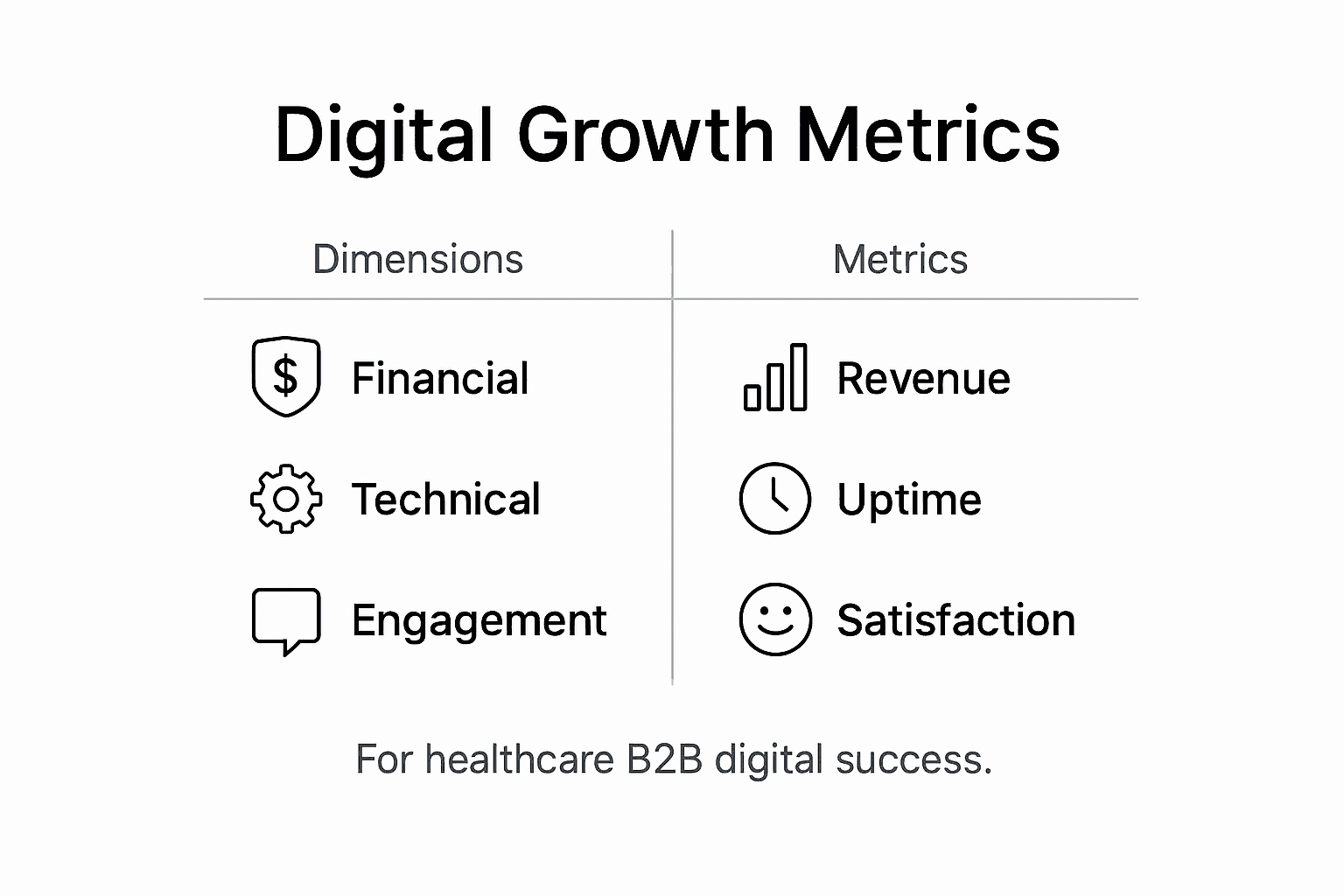
Patient engagement metrics represent a crucial dimension of digital growth, measuring factors such as user experience, digital interaction frequency, treatment outcomes, and patient satisfaction scores. Strategic partnership metrics examine the effectiveness of collaborative digital ecosystems, including the ability to integrate with external healthcare networks, share technological resources, and create innovative service delivery models. Organizational digital maturity metrics assess the workforce’s technological adaptability, innovation potential, and capacity to continuously evolve digital strategies in response to emerging healthcare technologies and market dynamics.
Use this reference to compare digital growth measurement dimensions and their impact:
| Metric Dimension | Example Metric | Organizational Impact |
|---|---|---|
| Financial Performance | Digital ROI and cost savings | Informs strategic investment |
| Technological Capability | Platform scalability, interoperability | Enhances innovation potential |
| Patient Engagement | User experience, satisfaction scores | Drives service quality and retention |
| Regulatory Compliance | Adherence to standards and protocols | Reduces legal and operational risk |
Pro tip: Develop a balanced scorecard approach that integrates quantitative and qualitative metrics, ensuring a comprehensive and nuanced understanding of your organization’s digital growth trajectory.
Risks, Compliance, and Common Pitfalls
Healthcare B2B digital growth initiatives face a complex landscape of potential risks and challenges that can significantly undermine technological investments and organizational strategies. Systematic research reveals critical risks including privacy concerns, security vulnerabilities, data accuracy challenges, and potential technological inequities that demand comprehensive and proactive risk management approaches.
The most prevalent risks in digital healthcare transformation can be categorized into four primary domains: cybersecurity threats, regulatory compliance complexities, technological implementation challenges, and workforce adaptation barriers. Cybersecurity risks include potential data breaches, unauthorized system access, and sophisticated cyber attacks targeting sensitive healthcare information. Regulatory compliance challenges emerge from rapidly evolving healthcare technology standards, data protection requirements, and complex legal frameworks that vary across different jurisdictions and healthcare sectors.
Technological implementation pitfalls often stem from underestimating the complexity of digital integration, failing to align technological solutions with specific organizational needs, and overlooking the human factors critical to successful digital transformation. Workforce adaptation challenges include resistance to technological change, skills gaps, and the need for continuous training and cultural transformation. Organizations must develop comprehensive strategies that address these multifaceted risks, including robust cybersecurity protocols, ongoing staff education, flexible technological frameworks, and a holistic approach to digital transformation that prioritizes both technological capabilities and human-centered design.
Pro tip: Conduct regular comprehensive risk assessments that integrate technological, regulatory, and human factors to create a dynamic and adaptive digital risk management strategy.
Unlock Your Healthcare B2B Digital Growth Potential Today
Navigating the complexities of digital growth in healthcare B2B requires more than just technology adoption. As this article highlights, achieving sustainable digital growth demands a strategic focus on data analytics, scalable technologies, and continuous learning. If you are struggling with aligning your digital strategy to adapt rapidly to changing markets or enhancing your patient engagement through digital means, you are not alone. Healthcare organizations often face challenges like regulatory compliance, workforce adaptation, and integrating advanced analytics effectively.
At Web Spider Solutions, we specialize in driving measurable results by transforming digital challenges into growth opportunities through smart B2B marketing strategies. Our expertise covers everything from crafting tailored campaigns in competitive healthcare sectors to leveraging paid advertising techniques that directly increase qualified leads and boost brand presence online. Explore our B2B Marketing Archives to see how targeted approaches help businesses like yours accelerate digital maturity while maintaining compliance and operational efficiency. Take the first step now with a free consultation at Web Spider Solutions and elevate your digital growth journey with proven strategies designed for the healthcare industry.
Frequently Asked Questions
What is digital growth?
Digital growth refers to a strategic approach that expands business capabilities through technological integration and digital transformation, enhancing organizational performance and customer experiences.
Why is digital growth important for businesses now?
Digital growth is crucial as it helps businesses adapt to changing market conditions, leverage data analytics, and implement scalable technologies that improve efficiency and competitive advantage.
What are the core principles of digital growth?
The core principles include data analytics for informed decision-making, customer-centric design, scalable technologies, and continuous learning to maintain adaptability in a fast-evolving market.
How can businesses measure their digital growth?
Businesses can measure digital growth through metrics such as financial performance, technological capability, patient engagement, regulatory compliance, strategic partnerships, and organizational digital maturity.