
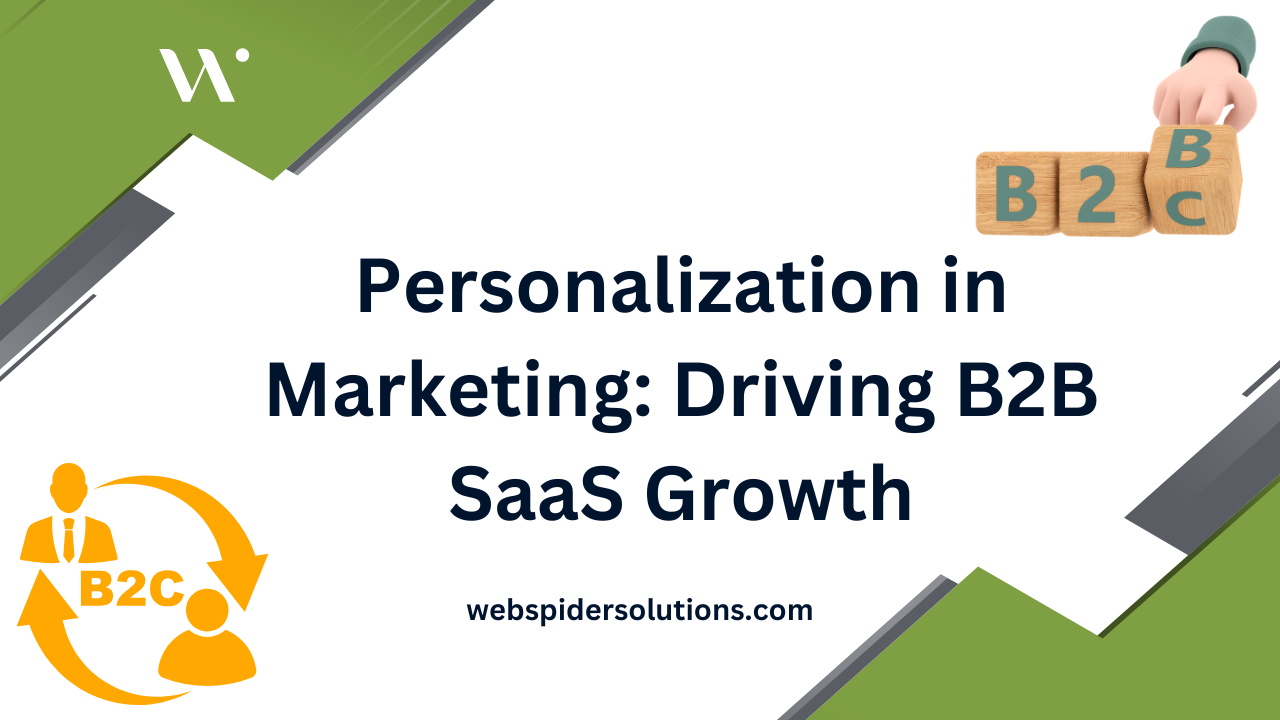






Nearly 80 percent of American B2B SaaS companies now rely on advanced personalization techniques to connect with customers more effectively. With generic campaigns fading in impact, digital marketing managers face growing pressure to meet rising expectations for tailored communication. This article uncovers how modern personalization strategies drive deeper engagement, transform user experiences, and help small and medium SaaS teams compete in a crowded global market.
Table of Contents
- Defining Personalization In Modern Marketing
- Types Of Personalization For SaaS Companies
- Personalization Technology And Data Management
- Overcoming Implementation Challenges In B2B SaaS
- Privacy, Compliance, And Ethical Considerations
Key Takeaways
| Point | Details |
|---|---|
| Personalization is Data-Driven | Effective marketing personalization relies on advanced data analytics to tailor messages and experiences to individual customer needs. |
| Diverse Personalization Strategies | SaaS companies utilize various methods including content adaptation and recommendation engines to enhance user engagement and satisfaction. |
| Privacy and Compliance Are Critical | Organizations must prioritize user consent and adhere to regulations like GDPR and CCPA to build trust and ensure responsible data usage. |
| Strategic Implementation is Essential | A phased approach to personalization, focusing on high-impact areas, is crucial for overcoming technical challenges and maximizing effectiveness. |
Defining Personalization in Modern Marketing
Modern marketing personalization represents a sophisticated approach to crafting individualized experiences that transcend traditional one-size-fits-all communication strategies. At its core, personalization involves leveraging data-driven insights to tailor marketing messages, content, and interactions specifically to each customer’s unique preferences, behaviors, and needs. Through advanced analytics and machine learning technologies, businesses can now create remarkably precise targeting mechanisms that resonate deeply with specific audience segments.
The concept of personalization has dramatically evolved from simple demographic segmentation to advanced causal inference techniques in marketing targeting. Contemporary marketers utilize complex algorithms and comprehensive data analysis to understand customer journeys, predict potential interactions, and develop highly contextual engagement strategies. This approach allows for real-time adaptations of marketing content, ensuring that every communication feels uniquely crafted for the individual recipient.
Personalization strategies in B2B SaaS marketing typically encompass multiple dimensions beyond basic contact information. These include behavioral tracking, predictive analytics, dynamic content adaptation, and contextual messaging that considers factors like industry vertical, company size, technological infrastructure, and specific pain points. Successful implementation requires robust data collection systems, advanced analytical capabilities, and a strategic framework that balances personalization with customer privacy expectations.
Pro Tip – Strategic Personalization: Begin by mapping your customer’s entire journey and identifying key decision points where personalized interventions can create maximum impact. Focus on collecting high-quality, actionable data points that enable genuine, meaningful customization rather than superficial modifications.
Types of Personalization for SaaS Companies
SaaS companies employ multiple sophisticated personalization strategies that transform user experiences through intelligent, data-driven approaches. These personalization techniques go far beyond simple name insertions, creating comprehensive frameworks that adapt dynamically to individual user behaviors, preferences, and operational contexts. Advanced AI-driven personalization frameworks have revolutionized how software platforms engage with their customers, enabling unprecedented levels of customized interaction.
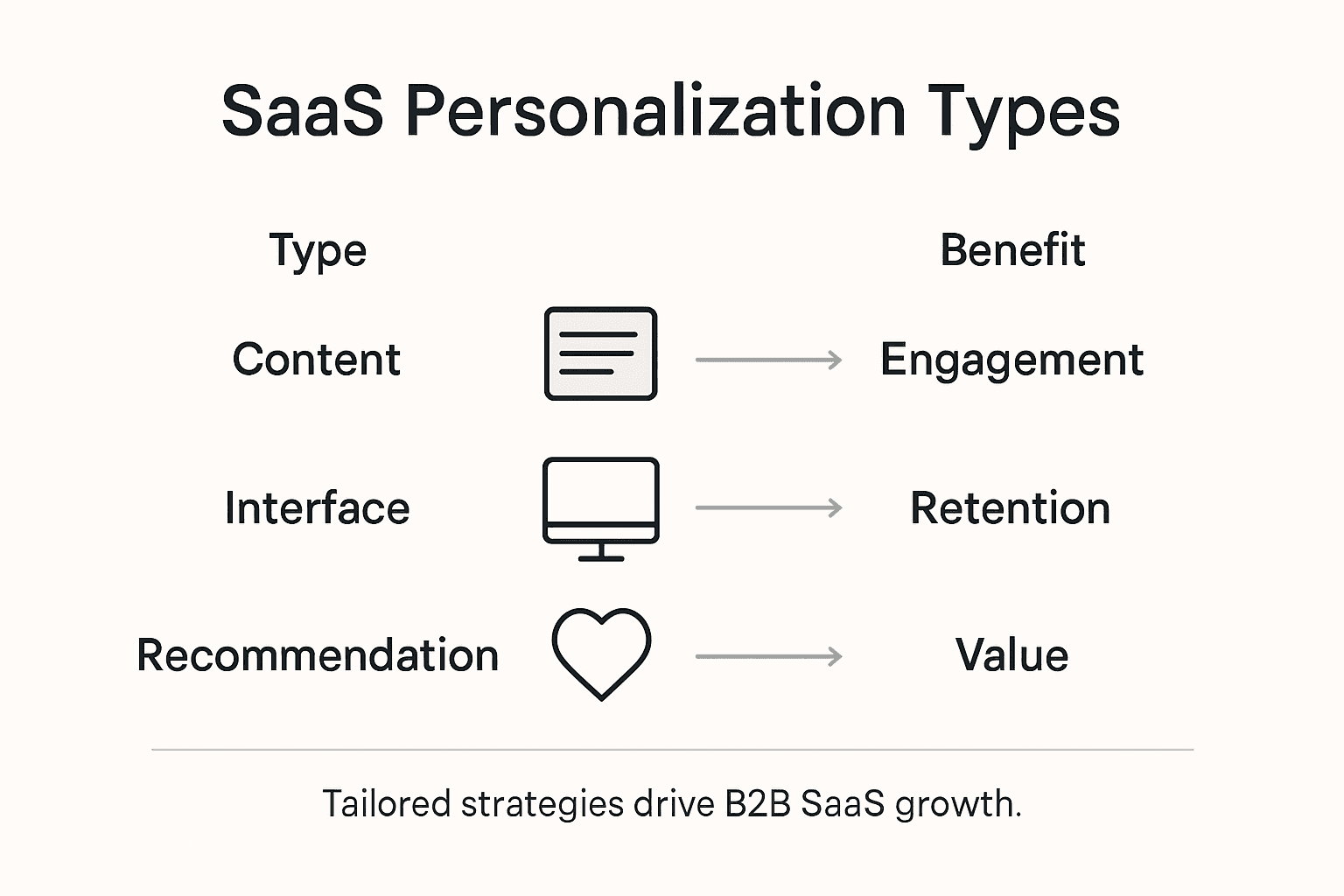
The primary types of personalization in SaaS environments include content personalization, user interface adaptation, recommendation engines, and behavioral tracking. Content personalization involves dynamically adjusting educational materials, product interfaces, and support resources based on user roles, industry vertical, and previous interaction patterns. User interface adaptation allows platforms to modify dashboard layouts, feature prominence, and navigation schemas according to individual user preferences and usage histories, creating a more intuitive and efficient experience.
Recommendation engines represent another critical personalization strategy, utilizing machine learning algorithms to suggest relevant features, integrations, or upgrades tailored to specific user needs. These systems analyze historical usage data, comparative benchmarks, and predictive analytics to generate contextually relevant suggestions that enhance user productivity and software utility. Behavioral tracking goes even deeper, monitoring granular interaction patterns to provide proactive support, identify potential friction points, and continuously refine the user experience.
Pro Tip – Personalization Strategy: Develop a comprehensive data collection framework that captures nuanced user interactions while maintaining strict privacy standards. Focus on collecting actionable insights that directly translate into meaningful, user-centric software experiences rather than accumulating excessive, irrelevant data points.
Here’s how common personalization types in SaaS differ in function and business value:
| Personalization Type | Main Function | Example Use Case | Business Value |
|---|---|---|---|
| Content Personalization | Adapts learning materials to user roles | Displaying industry-specific guides | Increases user engagement |
| UI Adaptation | Modifies dashboard layout per user | Arranging features by usage history | Enhances productivity |
| Recommendation Engine | Suggests features or integrations | Recommending add-on modules | Drives upselling opportunities |
| Behavioral Tracking | Monitors user interactions | Proactively offering support | Reduces customer churn |
Personalization Technology and Data Management
The technological infrastructure supporting marketing personalization represents a complex ecosystem of advanced data processing and analytical technologies. Core technologies driving marketing personalization encompass sophisticated big data analytics, real-time processing engines, and machine learning algorithms designed to transform raw customer data into actionable insights. Modern SaaS platforms leverage these technologies to create dynamic, responsive user experiences that adapt instantaneously to individual behavioral patterns and preferences.
Data management strategies form the critical backbone of effective personalization technology. Customer relationship management (CRM) systems play a pivotal role in aggregating, cleaning, and structuring customer information from multiple touchpoints. These systems enable businesses to develop comprehensive customer profiles by integrating data from email interactions, website behaviors, product usage metrics, and support ticket histories. Advanced predictive models and AI-powered analytics further enhance these capabilities by generating nuanced segmentation strategies and anticipating future customer needs with remarkable precision.

The technological architecture supporting personalization requires robust data governance frameworks that balance sophisticated targeting capabilities with stringent privacy protections. This involves implementing sophisticated data anonymization techniques, establishing clear consent mechanisms, and developing transparent data usage policies. Machine learning algorithms continuously refine segmentation models, enabling increasingly granular and contextually relevant personalization strategies that respect individual user preferences while delivering highly targeted experiences.
Pro Tip – Technology Integration: Develop a holistic data management strategy that prioritizes data quality, interoperability between systems, and continuous learning algorithms. Invest in technologies that can seamlessly integrate multiple data sources while maintaining strict privacy and security standards.
Overcoming Implementation Challenges in B2B SaaS
Implementing personalization technologies in B2B SaaS environments presents a complex array of strategic and technical challenges that require comprehensive, multifaceted approaches. Systematic challenges in SaaS solution implementation reveal intricate obstacles ranging from technical integration complexities to organizational resistance and regulatory considerations. These challenges demand nuanced strategies that address both technological infrastructure and human factors within enterprise environments.
One of the most significant implementation barriers involves data fragmentation and cross-functional misalignment. Organizations frequently struggle with siloed information systems, inconsistent data quality, and disparate technological platforms that impede seamless personalization efforts. Barriers to AI-driven personalization adoption highlight the critical need for comprehensive data integration strategies that enable unified customer views while maintaining stringent privacy and security standards. Successful implementation requires breaking down departmental barriers, establishing clear data governance protocols, and developing robust technological frameworks that support holistic customer understanding.
Overcoming implementation challenges necessitates a strategic, phased approach that balances technological capabilities with organizational readiness. This involves creating cross-functional teams dedicated to personalization initiatives, investing in advanced data management technologies, and developing iterative implementation strategies that allow for continuous learning and adaptation. Enterprises must cultivate a culture of technological openness, provide comprehensive training programs, and establish clear metrics for measuring personalization effectiveness to ensure sustainable, long-term success.
Pro Tip – Strategic Implementation: Develop a personalization roadmap that prioritizes incremental improvements, focuses on high-impact use cases, and maintains flexibility for technological evolution. Start with pilot programs in specific departments to demonstrate value and build organizational momentum before scaling across the entire enterprise.
Privacy, Compliance, and Ethical Considerations
In the evolving landscape of marketing personalization, privacy and ethical considerations have become paramount concerns for B2B SaaS companies seeking to balance technological innovation with responsible data practices. Global regulatory frameworks surrounding personalization and privacy highlight the complex interplay between advanced targeting capabilities and fundamental consumer rights. These regulations, including the General Data Protection Regulation (GDPR) and California Consumer Privacy Act (CCPA), mandate stringent requirements for data collection, processing, and user consent.
The ethical dimensions of personalization extend far beyond mere legal compliance. Algorithmic transparency and potential bias represent critical challenges that demand proactive organizational strategies. Ethical implications of AI-driven marketing personalization reveal significant risks associated with unchecked data collection, including potential violations of consumer autonomy and unintentional discriminatory practices. Successful SaaS platforms must develop robust governance frameworks that prioritize user privacy, provide clear opt-out mechanisms, and maintain comprehensive documentation of data usage practices.
Navigating the intricate landscape of privacy and compliance requires a holistic approach that integrates technological safeguards with organizational culture. This involves implementing advanced data anonymization techniques, developing granular consent management systems, and creating transparent communication channels that empower users to understand and control their data. Companies must invest in continuous training programs that educate teams about ethical data handling, develop sophisticated risk management protocols, and regularly audit their personalization technologies for potential privacy vulnerabilities.
Pro Tip – Ethical Personalization: Create a comprehensive privacy framework that goes beyond minimum legal requirements by prioritizing user trust and transparent data practices. Develop clear, accessible privacy policies and implement proactive consent mechanisms that give users genuine control over their personal information.
Below is a summary of privacy and ethical priorities for B2B SaaS personalization:
| Area of Focus | Key Priority | Description |
|---|---|---|
| Data Privacy | User Consent | Implement clear opt-in choices |
| Compliance | Regulatory Alignment | Follow GDPR and CCPA protocols |
| Ethics | Algorithm Transparency | Disclose how data drives decisions |
| Risk Management | Audit Practices | Regularly review privacy safeguards |
Unlock B2B SaaS Growth with Tailored Marketing Personalization
Personalization in marketing is no longer optional for B2B SaaS companies aiming to thrive in competitive digital landscapes. This article highlights key challenges like data fragmentation, ethical concerns, and the need for strategic, data-driven experiences that elevate customer engagement and reduce churn. If your goal is to leverage behavioral tracking, recommendation engines, and dynamic content to deliver truly customized customer journeys that convert, addressing these pain points is critical.
At Web Spider Solutions, we understand the power of data-driven personalization combined with expert digital marketing strategies. Our comprehensive services span from SEO and paid advertising to content marketing that targets your ideal audience with precision. Explore success stories in our Stories Archives to see how we have helped SaaS businesses increase targeted leads and optimize user experiences. Ready to overcome implementation challenges and maximize your marketing ROI with proven solutions? Visit our Paid Advertising Archives and partner with us to get started today. Visit our website now for a free SEO audit and personalized consultation designed to accelerate your growth.
Frequently Asked Questions
What is marketing personalization in B2B SaaS?
Marketing personalization in B2B SaaS refers to the practice of tailoring marketing messages, content, and interactions to individual customer preferences and behaviors using data-driven insights and advanced analytics.
What types of personalization can SaaS companies implement?
SaaS companies can implement various types of personalization, including content personalization, user interface adaptation, recommendation engines, and behavioral tracking to enhance user experience and engagement.
How can technology aid in personalization for B2B SaaS?
Technology supports B2B SaaS personalization through advanced data analytics, real-time processing, and machine learning algorithms that transform raw customer data into actionable insights, enabling dynamic user experiences.
What are the privacy considerations in marketing personalization?
Privacy considerations in marketing personalization involve compliance with regulations like GDPR and CCPA, ensuring user consent, algorithm transparency, and implementing robust data governance frameworks to protect user information.
Recommended